
Are you a UBC undergrad thinking about going on a student exchange? It can be a daunting decision. You might wonder, what's it like spending a year or a semester in another country? How can you prepare? And how do you handle it when things go sideways? We talked with a group of UBC Global Ambassadors who studied abroad with a Go Global program. They spoke with us candidly, sharing their personal impressions, fears and misgivings, best memories, top tips and advice. (This story is part of a series of Global Exchange Insider interviews.)
Meet Nicole Tam, a 5th-year UBC Vancouver undergraduate student in Integrated Sciences in the Faculty of Science. She was born and raised in Vancouver.

Exploring at the Sólheimajöjull Glacier (Iceland), taken by Nicole Tam
Before you go
Why did you pick the Hawaii Field Course: Comparative Field Research Course for your exchange? How did you hear about it?
As an Integrated Sciences student, it seemed only natural that I would consider going on an Integrated Sciences Go Global Seminar. I didn’t so much as pick a location, as decide to participate in the Integrated Sciences Global seminars. I took ISCI 361 (Iceland Field Course: Systems Approaches to Regional Sustainability) in May 2024, and enjoyed it so much that I decided to also participate in ISCI 461 (Hawaii Field Course: Comparative Field Research Course).
What was the application process like? Any tips?
The application process was relatively simple, however you do need to be aware of deadlines! Global Seminars (especially the one that happens during February reading break) have different deadlines than the Go Global exchange program, so be sure to stay on top of deadlines. For the application itself, you’ll need to talk about your personal/academic motivations for applying, previous global experience, why you are a suitable candidate for the program, and how you will contribute to a positive group learning environment. Because it is run by Integrated Sciences, there is a preference for Integrated Sciences students. That being said, many of my peers were from different programs - so if you’re interested you should still apply no matter your academic background!
How did you prepare? Anything to be aware of? (travel, cultural differences, classes, etc.)
In terms of preparation, the professors do a great job preparing students in advance. If you have the opportunity, you can take ISCI360, which is not mandatory, but it will give you a headstart on the course material and systems thinking. I personally didn’t take ISCI360 and still felt that I had sufficient background knowledge to succeed and make the most of my experience.
Once your enrollment in the ISCI seminar is confirmed, a CANVAS module will be released to help students become familiar with the course content and the location of the seminar. Both classes are based on systems thinking and regional sustainability, so the pre-reading modules cover (1) systems thinking and their applications and (2) site-specific information that includes history, culture, and geographical context. All of this is important to know—it will help you engage in conversations and collaborate with your peers while you are in the field.
In terms of things to be aware of - both Iceland and Hawaii are relatively similar to Canada, culturally. The Iceland Field Studies course takes place in May, right after finals season, while the Hawaii (or Bermuda) Field Studies course takes place during the February reading break. Additionally, in some instances you might have guest speakers, but mostly Dr. Denise Gabriel, Dr. Steve Quane, and Dr. Lee Groat (the professors who run the course) will be the ones talking about course material. Every day in the evening after all of the activities, there is usually a debrief which covers content and takeaways from the day. There are also several learning activities throughout each course.
What worries did you have beforehand? How did you overcome the anxiety?
My Integrated Science background is very much in Life Sciences - and so I was a little bit worried about how I would fare going into not only a completely different setting, but also a completely different learning environment than what I was used to. I found (1) the pre-reading modules to be very helpful and (2) both professors and peers to be extremely open-minded and willing to answer any questions that you had. The Integrated Sciences teaching team has been running these courses for almost a decade - and whatever concerns you have, they have probably either thought of a solution or. If you do have questions, I would highly recommend reaching out to the teaching team!
During the experience
How was the overall experience? What did you learn?
The overall experience for both Field Studies courses was amazing. I’ll break it up by country, for those of you who are interested in a country-specific experience.
Iceland: The Iceland experience was spectacular. In Iceland, the field studies course moves around a lot more. We spent the first few days in Reykjavik (the big city in Iceland), exploring culture and going to museums (there are also some very good bakeries). We also had a little bit of free time, which was nice. One thing that you might not expect is the time difference - Iceland is 7 hours ahead of Vancouver, so it took some getting used to. It’s also so far north that the sun sets very late and rises early - so bring a sleeping mask! After Reykjavik, we drove East around the Golden Circle and eventually made it to the Westman Islands (Heimaey) - stopping at many incredible sites such as parks, waterfalls, and geothermal areas. We stayed in a mix of hostels and hotels, and were on the road for bits of the trip. Iceland was different from any place I’ve ever visited - it has a beautiful and rugged landscape, and the people are incredibly friendly.
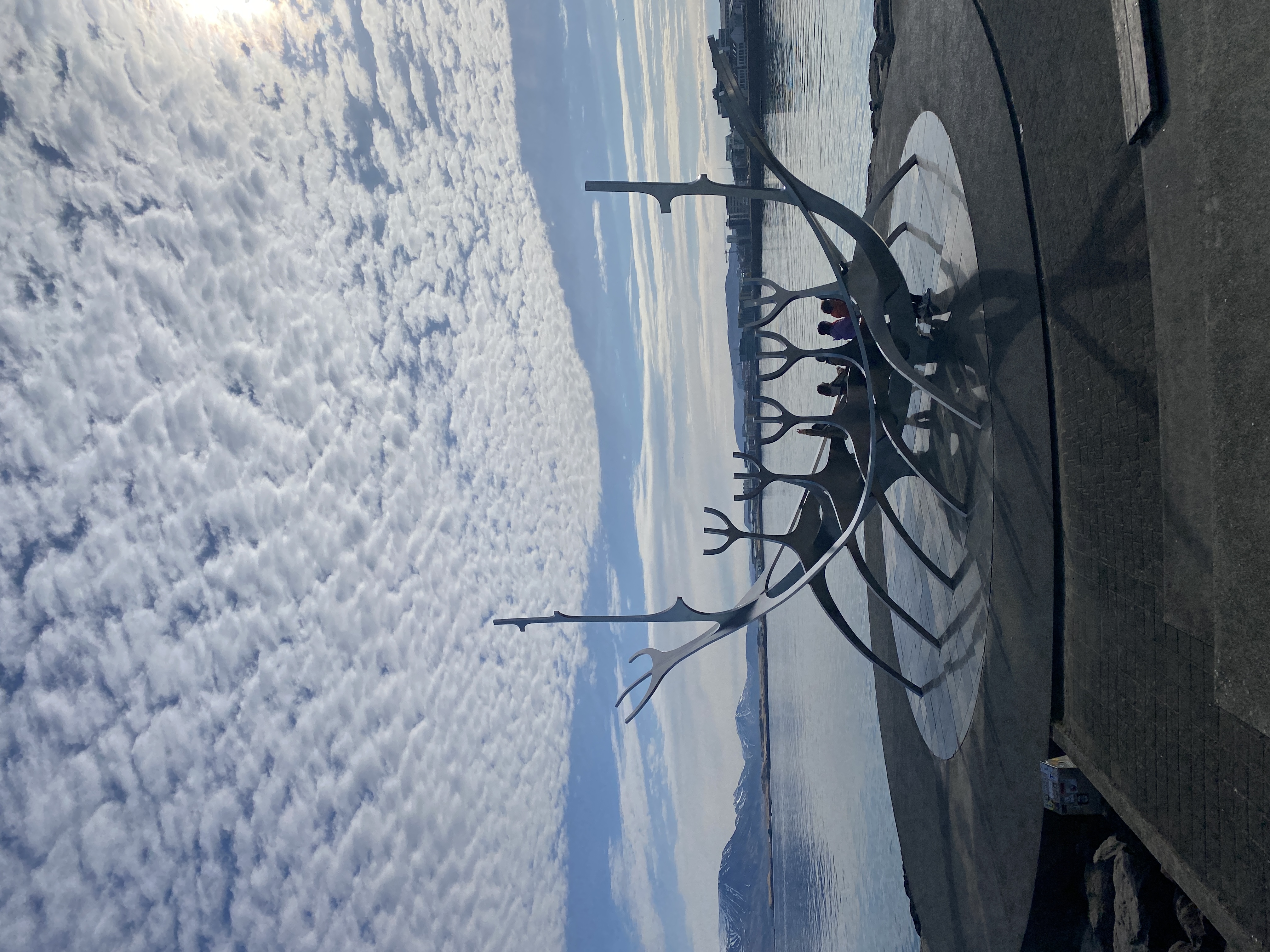
Sun Voyager (Reykjavik, Iceland), taken by Nicole Tam
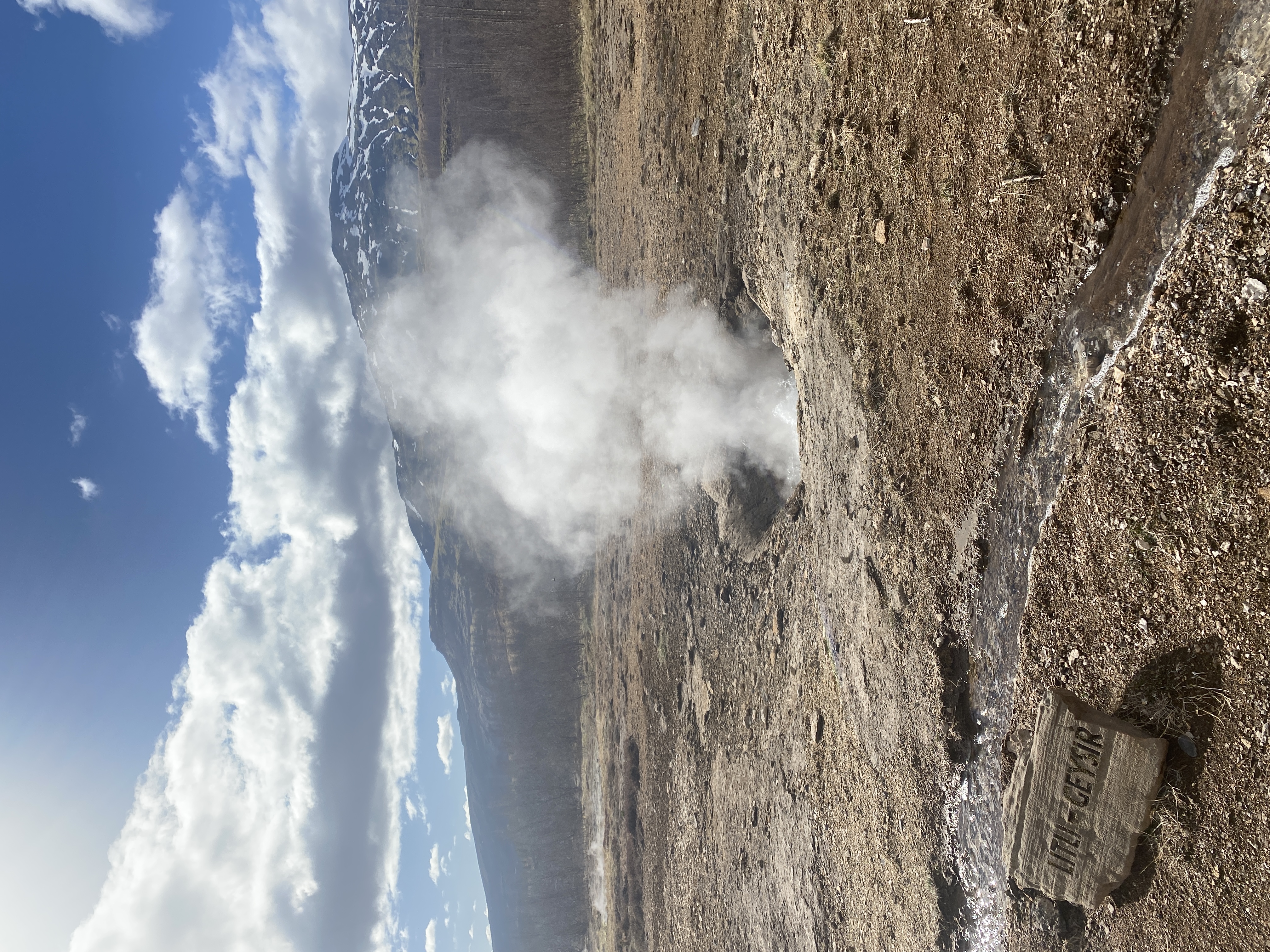
Geysir Geothermal Area (Iceland), taken by Nicole Tam
Hawaii: I had been to Hawaii previously, but Hawaii is actually an archipelago - and every island you visit is different. The field studies course takes place on the Big Island where most people are most familiar with is Kona - known for its dry climate and beaches. Unlike Iceland, in Hawaii you stay in a house for the entire duration of the program, which is located in Hilo. Hilo is the rainy and lush side of the Island. I had a wonderful experience in Hawaii, and it was also interesting to compare and contrast the field course experience to the vacation experience that I had previously. Dr. Steve Quane, who is on the ISCI teaching team, completed part of his education in Hawaii, and so he was extremely knowledgeable about the Big Island’s geography and geology. A few highlights from the trip included snorkelling, seeing green sea turtles, a Kona Coffee farm tour, visiting Hapuna Beach, walking inside a lava tube, and visiting various parks and historical sites.

Sea turtle spotting (Hawaii), taken by Nicole Tam

Rainbow Falls, Wailuku State Park (Hawaii), taken by Nicole Tam
If you could change something or do it differently, what would you change or do?
I think I might pack differently! Iceland is colder than I expected - even though it’s May, it’s still chilly, so be sure to bring layers. Hawaii is much warmer than you expect - even though it’s February. I think we had exceptionally nice weather, but be sure to bring several pairs of shorts, short-sleeved tops, and swimsuits.
How were the academics?
The academics were very manageable - the whole trip is a learning experience, and so as long as you’re ready to be learning 24/7 for a week, you’re good to go! The pre-readings are an excellent resource, as are the professors. You’re also asked to bring notebooks with you everywhere you go, and so I took notes at almost every single stop/site we visited to keep a record of all my thoughts. I found that every single person on the trip was willing to learn. This creates an environment where you can speak to everyone about things that you find interesting or things you may have questions about. I believe that every year the evaluation methods are a little bit different, but usually there is either a written test or project at the end of the in-person part of the field studies course. Once you arrive back in Vancouver, there is also either a final project or a report due.
How was the social aspect?
Amazing! There are only about ~15 students on each trip and you share rooms and meals, so you get to know everyone really quickly. I found everyone to be incredibly open-minded, willing to make friends, and wanting to explore and participate.

Hiking Pololū Valley (Hawaii), taken by Nicole Tam
After the experience
Would you recommend this experience to others? What can they look forward to?
Absolutely. I would highly recommend this experience to any student (from any background) that is interested in learning more about sustainability. Students can look forward to a well-run program,where intentional thought and effort has been put into adapting the course to best allow students to learn and experience unique things.
What was the impact on your academic and personal development?
The Global Seminars provide an experience that you wouldn’t be able to get by yourself if you were travelling. It allows you to really learn about each culture in a meaningful way.
"These seminars have changed the way that I now experience travelling."
I find myself asking a lot more questions and reflecting upon systems and how they came to be in a social, economic, historical, and cultural perspective. As a tourist, it’s only natural to want to experience different cultures - but now I often think about the positive and negative impacts of tourism, what responsible tourism looks like, and how I can give back to local communities.
Read more Go Global student stories.